A First Evening at a New Club: How to Make the Visit Low-Pressure
A first evening at a new club is easier with a simple plan: observe the format, ask one practical question and decide later whether it suits you.
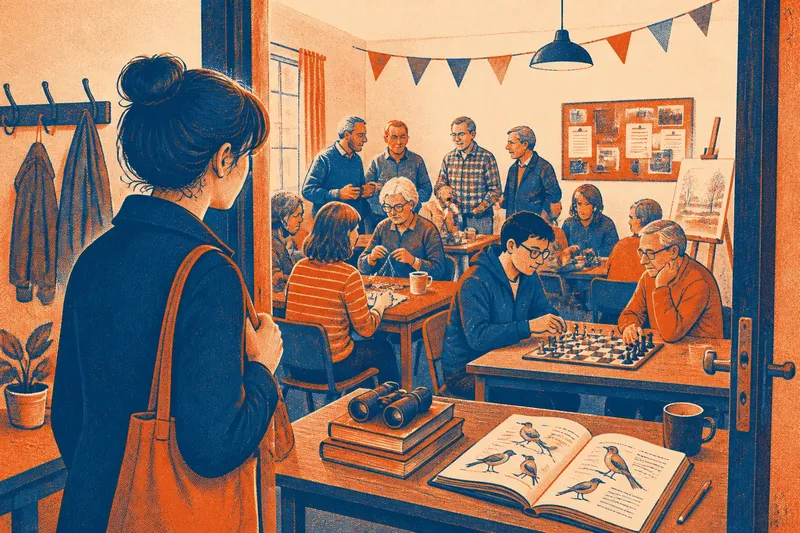
You find the community hall, pause outside the open door and hear a burst of conversation, then the scrape of chairs. A first evening at a new club can feel oddly formal, even when everyone inside is carrying knitting, chess sets or a stack of bird guides. You do not need to arrive with a polished introduction or commit to becoming a regular. The useful aim is smaller: learn how the evening works, ask one practical question and make your decision once you have left.
The right approach depends on what is making the visit feel difficult. Perhaps you are unsure about the activity, the people, the practical arrangements or the possibility of being put on the spot. Sorting out which concern matters most gives the evening a shape without turning it into an audition.
What are you hoping to find at a first evening at a new club?
Before setting out, name the main thing you want to learn. It might be whether the group welcomes beginners, whether its pace suits you, or whether the meeting is mostly organised activity or informal chat. A single question is easier to carry into an unfamiliar room than a vague demand to decide whether you “belong”.
Keep the aim modest. You are assessing a social arrangement, not judging every person you meet. A club can be friendly but wrong for your available evenings; it can also seem quiet at first and become more comfortable once you understand the routine. The first visit gives you material for a decision, not a verdict on your personality.
If you are unsure about the activity, should you observe first?
If the main uncertainty is whether you will enjoy the pastime, watching for a little while is a sensible start. Look at what members actually do, how much instruction is involved, and whether newcomers can join at their own pace. A model railway group, for instance, might spend an evening discussing layouts rather than building anything; the club’s description may not tell you that distinction.
Choose a place where you can see the activity without standing in the way. Notice whether people explain what is happening when someone asks, whether materials are shared, and whether there is a natural point at which a newcomer can take part. You need not inspect the room like a museum attendant. A few observations can answer the question you came with.
If someone offers you a turn and you would rather watch, a simple “I’d like to see how it works first, thank you” is enough. If you do join in, choose a small task that is easy to stop. The aim is to sample the format, not to demonstrate ability. A new club should not require you to perform confidence before you have found the coat hooks.
If you worry about meeting people, what should you do?
If the activity itself appeals but the social part feels uncertain, give yourself a small opening rather than trying to charm the whole room. Say hello to the person who greets you, then ask where visitors usually sit or what the group is working on. These questions are ordinary, which is their advantage: they allow conversation without requiring a biography.
Look for the club’s existing social rhythm. Some groups chat over tea before beginning; others settle into a task and talk as they go. A quiet stretch need not mean you have been excluded. Members may be concentrating, setting up equipment or continuing a conversation they began last week. Watch how people interact before deciding that you must fill every pause.
If the group is large, speak to one person at a time. If it is small, a brief introduction to the room may be the usual custom. You can say your name and what brought you there without explaining your entire history with the hobby. A club is not a job interview, though the name tags occasionally suggest otherwise.
If the practical arrangements are unclear, what should you ask?
Use your one practical question on the detail that could affect whether you return. It may concern whether visitors need to bring equipment, how the meeting is organised, or whether beginners can join without prior experience. Ask the organiser or the person who welcomed you, rather than trying to infer the answer from a pile of supplies.
Make the question concrete. “Do people bring their own materials, or are there shared supplies for a first visit?” is more useful than “How does everything work?” If timing is your concern, ask what usually happens when someone arrives partway through. If you need to leave at a set time, ask whether that would interrupt the activity. The answer should help you picture an ordinary visit.
Say you are considering a local sketching club and are unsure whether visitors need to bring a full set of materials. You ask the organiser, who explains that paper and pencils are available for newcomers, then observe a short demonstration and a relaxed drawing session. On the way home, you note that the pace suited you but the late finish did not. That gives you a clear next decision: ask whether another meeting has an earlier finish, or leave this group off your list.
What should you look for during the meeting?
Use the room as evidence about the format rather than trying to decode every glance. Notice how the evening begins, whether someone explains the plan, and what happens when a newcomer arrives. These details show how much of the session depends on prior knowledge. A club with a clear welcome may suit someone who likes structure; one that moves straight into informal conversation may suit someone who prefers a looser evening.
Pay attention to the balance between the activity and the social setting. In a board-game group, for example, you might want to know whether newcomers are paired with an experienced player or expected to know the games already. In a gardening club, you might be more interested in whether members exchange practical advice or mainly arrange work parties. The same hobby can produce very different evenings.
Notice your own comfort without treating every awkward moment as a warning sign. You may feel more at ease after the first conversation; you may remain aware of the unfamiliar room throughout. Both responses are useful. A new place can take time to feel ordinary, but an activity that consistently leaves you uneasy deserves a closer look before you commit.
Which first-visit situation sounds most like yours?
What if you already know the hobby but not the club?
Focus on the group’s customs, level of formality and expectations around attendance. You may know how to play bridge or mend a garment but still want to see whether this club favours structured sessions or casual practice. Ask how a typical meeting is arranged, then decide whether its style suits the way you like to spend time.
What if you are a complete beginner?
Watch whether instruction is available and whether newcomers can participate without slowing the session down. Ask whether people are expected to arrive with any prior knowledge. A welcoming club need not teach every skill from scratch, but its approach should be clear enough for you to judge before signing up.
What if you have limited time or energy?
Ask about the usual shape of the meeting and whether it is acceptable to leave at a natural pause. Consider the journey, start time and how much preparation the activity seems to require. A club can be appealing in the room and still be a poor fit for the week you actually have.
What if the first evening feels awkward?
Separate ordinary first-visit uncertainty from a specific concern, such as unclear expectations or dismissive treatment. Give yourself permission to leave when the session ends without promising to return. If you cannot identify a practical reason for the discomfort, a second visit may help; if you can, take that reason seriously.
How should you decide whether to return?
Make the decision after you have left, when you are no longer trying to follow the conversation and read the room at once. Ask yourself three plain questions: Did the activity interest me? Could I understand how to take part? Would attending fit my ordinary routine? You do not need a perfect answer to all three, but each points to a different issue.
If the activity appealed and the group’s customs were simply unfamiliar, returning once may tell you more. If the people were pleasant but the meeting’s timing or structure does not work, liking them does not create extra hours in the evening. If something felt disrespectful or uncomfortable, you do not owe the group another chance merely to be fair-minded.
Where the answer depends on membership terms, equipment rules or local arrangements, check the organiser’s information before making a commitment. For a first visit, though, a note on your phone is often enough: what you liked, what you would ask next and what might prevent a return. Think of it as a coat-pocket map, not a review of the club.
What is a useful plan for the next visit?
If you decide to go back, make the second visit more specific than the first. You might try the activity, speak to a different member or attend the part of the meeting you did not see. One small intention gives you a reason to return without demanding that the club feel familiar immediately.
If you decide not to return, you have still learned something useful about the kind of leisure you want. Perhaps you prefer a smaller group, a more structured lesson or a meeting at a different time. A first evening at a new club works best as a low-pressure way to gather that information. Leave with your own belongings, your one practical answer and the freedom to choose what comes next.