When Hobbies Became a Way to Spend Free Time
When hobbies became a way to spend free time, activities gained a more personal meaning. See how the word changed and what still distinguishes a hobby.
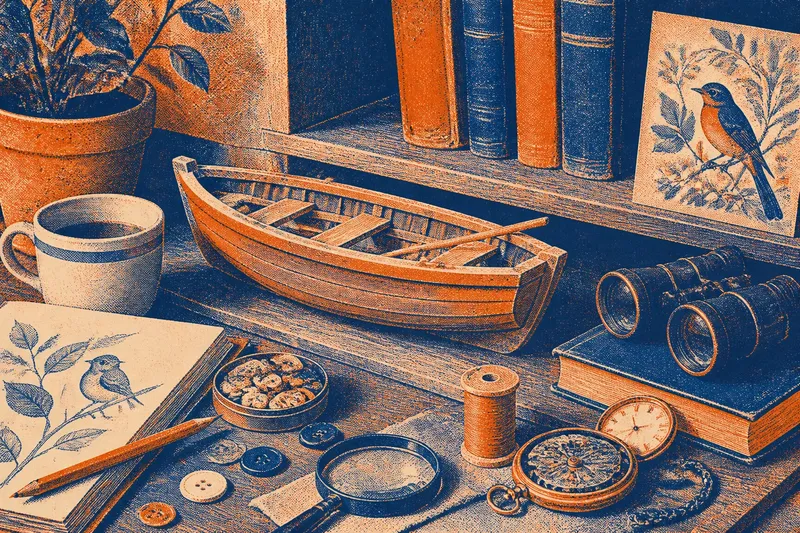
A small wooden boat sits on a shelf until its maker returns to it after supper. The moment offers a useful way to think about when hobbies became a way to spend free time: not when people first made things for pleasure, but when a chosen pursuit could be understood as its own part of life.
The word and the habit acquired their modern meanings gradually. Earlier uses of “hobby” included a toy horse and, later, a hobbyhorse: a subject or pursuit someone returned to persistently. The history is not a simple tale of work ending and leisure beginning. It is a shift in how people described activities that could serve practical, social and personal purposes at once.
Why did “hobby” have more than one meaning?
Older uses of “hobby” could suggest a child’s toy horse or a person’s recurring preoccupation. The word sometimes carried a hint of eccentricity, as if the hobbyist had become unusually absorbed in a private fancy.
That older tone did not disappear as the word came to describe leisure. It left a trace of suspicion that a hobby was indulgent or unnecessary. The later, familiar meaning softened the judgement: a hobby became an activity someone chose to pursue regularly for pleasure, often with growing knowledge or skill.
Materials alone do not decide whether something is a hobby. Reading, repairing a clock or tending a garden might be paid work, a household task, a family obligation or a chosen interest. Purpose matters, as does a person’s freedom to stop.
When did leisure become easier to recognise?
There was no single moment when work and free time became separate compartments. In many settings, household production, seasonal labour and social duties sat alongside play, visiting, music and religious observance. The balance varied by place, livelihood and circumstance, so it is safer to describe a gradual change in how time was organised than a universal turning point.
In settings where wage work and more regular schedules became familiar, people could more readily identify time outside paid labour as a distinct part of the day. That did not mean everyone had ample spare time. It did make leisure easier to discuss as time that might be used for rest, entertainment or a chosen interest, rather than only as a pause within necessary tasks.
Think of a kitchen drawer divided into compartments. The objects need not change for their arrangement to alter how they are understood. A craft once practised mainly for household use might also become a chosen pursuit when practical necessity no longer explained the whole reason for doing it.
How did hobbies become part of personal identity?
A hobby gives someone a modest claim over attention and time. Naming local birds, keeping a sketchbook or learning how old tools were made can express what a person notices without turning the interest into a public identity.
Printed manuals, specialist societies, exhibitions and informal circles helped enthusiasts exchange methods and knowledge beyond the household. Such networks could give a pursuit shared terms and recognisable practices. They also made some hobbies look more organised from the outside than they felt to the person doing them.
Recognition brought a tension with it. A hobby might be valued as evidence of discipline, taste or useful skill, while still being defended as something done for pleasure. It sat between work and idleness: more deliberate than a passing diversion, but not required to earn wages or produce a saleable object.
What can make a hobby feel like work?
Enjoyment can become tangled with output. Once an activity is judged by progress, expertise or finished pieces, a session may feel like a failed work shift if it produces nothing. A narrower aim can help: practise a stitch, study one subject or spend time with a tool, while leaving the result open.
Free time can also start to seem like a reward that must be earned after every obligation is cleared. Obligations have a regrettable tendency to multiply. Rather than waiting for an empty calendar, someone might choose a modest, ordinary period for an interest before the day is spent.
People may also dismiss an activity because it looks too casual to count. Collecting local maps, making paper models or listening closely to birdsong need not involve a club badge or display cabinet. A useful question is whether the activity is chosen, revisited and satisfying in itself.
How can you tell whether an interest is a hobby?
Say you have a tin of old buttons and begin sorting them by shape after dinner. You note where a few came from, then return to the tin because the distinctions interest you. The activity is chosen and recurring, and its pleasure does not depend on finishing a collection; it can reasonably be called a hobby.
An interest can change without ceasing to be a hobby. Someone might move from making an object to reading about its history, or from solitary practice to occasional conversation with others. A hobby is not a contract to keep the same routine; it is a recurring place for attention.
What do readers still ask about hobbies?
When did “hobby” start to mean a leisure pursuit?
The meaning developed gradually from older uses linked to the hobbyhorse and to persistent personal interests. Its association with chosen leisure grew as people more readily distinguished some time and activity from immediate necessity.
Is a hobby different from a pastime?
The words overlap, but “pastime” can mean any way of passing time, including a casual diversion. “Hobby” usually suggests a recurring interest that receives attention, though it need not involve formal skill.
Does a hobby need to produce something?
No. Making and collecting are common forms, but observation, study and practice can matter just as much. The purpose can be the attention itself rather than a finished result.
Can an activity be both work and a hobby?
Yes. The same craft can earn money in one setting and provide chosen recreation in another. Purpose, obligation and the freedom to set it aside help distinguish the two roles.
Why does the older meaning still matter?
The word’s history keeps a useful tension in view. A hobby can be serious without becoming a job, and pleasurable without being empty. It gives free time a shape while leaving room to pause, change direction or follow an interest simply because it holds attention.
When hobbies became a way to spend free time, they did not replace older forms of play, craft or sociability. They gave such pursuits a more personal address: a chosen corner of the day, with no need to justify itself beyond being worth returning to.